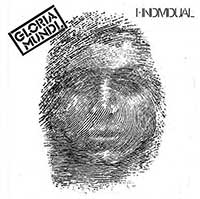
Metal Urbain

Formed in Paris in 1976, Metal Urbain were one of punk’s great outsiders – and one of its most radical experiments. While most punk bands were still plugging in guitars, bass and drums, Metal Urbain were ripping up the rulebook, combining heavily distorted guitar, snarling treated vocals, synthesizer and primitive drum-machine rhythms to create a righteous racket that sounded like nothing else around.
They sang in their native French, deliberately ignoring the idea that rock music had to be sung in English, and musically sat somewhere between the Sex Pistols‘ punk attack and the throb of Suicide. Stripping away bass and conventional drums gave them a cold, mechanical intensity that would prove hugely influential on the post-punk and industrial scenes that followed.
France largely didn’t know what to make of them. England did. Their singles found a much more receptive audience in the UK, where their confrontational sound and uncompromising attitude fitted perfectly with the anything-goes spirit of 1977. Three singles appeared on three different labels before singer Eric Débris departed, bringing the original incarnation to an end.
Metal Urbain didn’t just play punk differently – they questioned what punk rock could actually be.
This feature was put together from an entertaining telephone interview over 2 hours with Eric Debris on 16th September 2026.
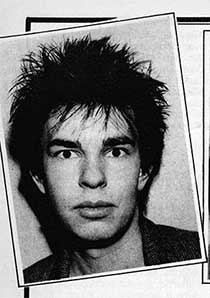
Influences
Eric Débris: I started, like a lot of kids, listening to The Beatles and stuff like that. But what changed everything for me was when I picked up a single by Captain Beefheart. It was Pachuco Cadaver on one side and another track from Trout Mask Replica on the other. I bought it because I liked the record cover. The guy looked weird! And on the back there were the lyrics.
A squid eating dough in a polyethylene bag
Is fast and bulbous. Got me?
I thought, “Oh, cool, I can listen to the song and get the lyrics.” I tried it quickly in the record shop and thought, “That’s interesting.” So I went home, played it and thought, “Wow, people can do weird stuff on records. It doesn’t have to be The Beatles.”
That was basically the starter for me. I started looking for more crazy stuff. I was also into a lot of the glitter and camp stuff – Bowie, Roxy Music and all the glitter bands. I think that was also the starting point for a lot of punk rockers. It was the idea that you could have people playing short songs based on rock ‘n’ roll rather than all the Genesis and prog-rock stuff that was around at the same time. I was never into that.
In terms of French music, there was nothing happening, really. Most of it was MOR, traditional pop and very conventional stuff. Basically, you had the French equivalent of the worst English crap.
All the rock stuff was completely on the side. There were hardly any rock bands touring in France. When French bands signed to record companies, the companies were trying to remodel them into something super-commercial.
So most of the kids who were into rock in France were listening to English or American stuff and didn’t pay much attention to French music. There were a few rock bands, like Les Variations, but the records were really bad. They were okay on stage, but the recordings were awful. There was also a glam band called Blue Vamp – the same thing: cool on stage but really bad on record.
So when you wanted to follow the French scene, it was more, “I’m going to do it because they’re French,” rather than because you really enjoyed the music. The music and the sound were coming from across the Channel, not from where we were.
Bloodsucker & De Sade
Eric Débris: Bloodsucker was around 1973 and ran till the end of 1974. I was involved, but more as someone hanging around. Bloodsucker was like a lot of French bands, which was a copy of the Rolling Stones. But everyone in it ended up joining other bands. Jacno ended up with Stinky Toys. Ricky Darling ended up with us and Asphalt Jungle.
I was there as well, hanging around and not doing much. I had played bass then synth. Sometimes I did the sound because I was interested in sound engineering from the start. I also wrote some lyrics. I started working with Zip Zinc, who at one point had been the drummer in Bloodsucker.
Other people hanging around were friends like Claude Panik but not involved in the music. Both Panic and Debris attended the Corvisart art school. What started the evolution into Metal Urbain was De Sade, the band Debris and Zinc formed, who had their first rehearsal in July 1975. The band is deliberately more avant-garde in style of music and approach, not least with their use of a drum machine instead of a conventional drummer and synths.
Zip Zinc got the band together with me playing synthesizers and all that. He was building all this stuff – like the early drum machine we used and the synthesisers as well. I remember one rehearsal when he said, “Well, drummers are passé. It’s drum machines.” So that’s always my excuse when a drummer asks me why we used a drum machine: our drummer Zip Zinc didn’t want to use a drummer!
With De Sade we were also trying to do something specific. We were into writers who were anti-naturalists, people like Oscar Wilde and Huysmans, who were saying that nature is boring, that things need to be manufactured. A chair is more comfortable than sitting on the ground against a tree.
We wanted to do the same thing with music. We wanted everything to be done with machines and electronics. Even the voice at the beginning was going through effects because we didn’t want anything natural. The drum is wood and skin, so that’s really natural. We didn’t want that.
It was Zip and me on the synthesiser reading pornographic texts – with an inaudible, dreadful background music…. Worse than Metal Machine Music. Punk 17, Stephane Pietri, Alexis Quinlin, Regine Deforges, 1977
Punk
Eric Débris: There was a super-mini scene in Paris, an equivalent of what was going on in London. It revolved around two shops in Paris in Les Halles, Open Market and Harry Cover. We were friends with Michel Estaban who ran Harry Cover. These people were already into punk rock, but there were very few records available. We could buy a few singles coming from America, like Television, Richard Hell and the Voidoids and stuff like that.
It was really just beginning.
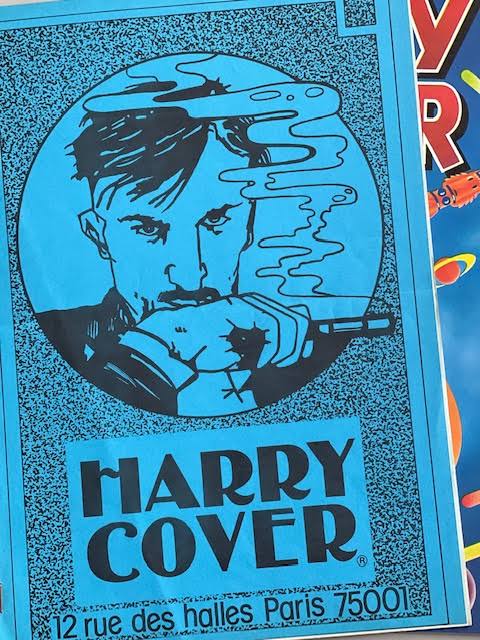
Michel Esteban and then girlfriend Lizzy Mercier Descloux, opened Harry Cover, a rock shop in Paris, in 1973, which became a meeting point as the French punk scene began to emerge.
A 1974 trip to New York put him at the heart of the CBGB scene, where he befriended Patti Smith, Robert Mapplethorpe, Richard Hell, Tom Verlaine and John Cale.
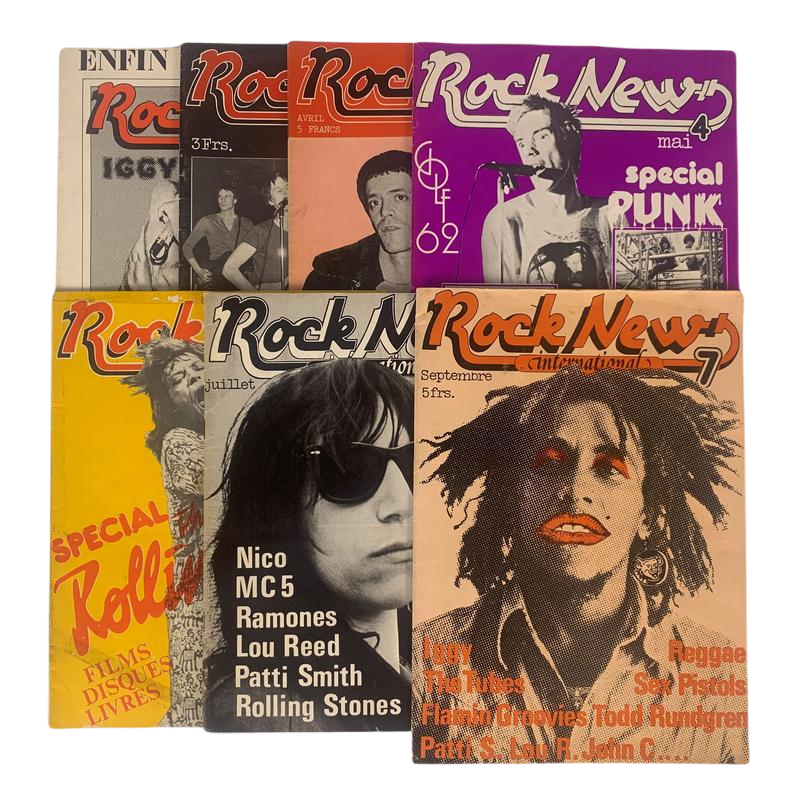
Back in Paris, they launched Rock News in 1975, documenting punk in France, Britain and America. He later published Patti Smith, helped bring the Sex Pistols to France in 1976, and promoted Stinky Toys in England, becoming an important link between the Paris, London and New York punk scenes.
L’Open Market was the record shop of the legendary anglophile Marc Zermati and was the HQ of his Skydog Records. Lester Bangs, Lenny Kaye, Jon Savage, Chrissie Hynde, Malcolm McLaren and all the local punks-to-be ranked among the customers.
It was Zermati who first released the legendary Iggy & the Stooges album Metallic KO and the Flamin Groovies. In his basement, bands like Asphalt Jungle would be rehearsing. It was Zermati who set up the Mont De Marsan festivals
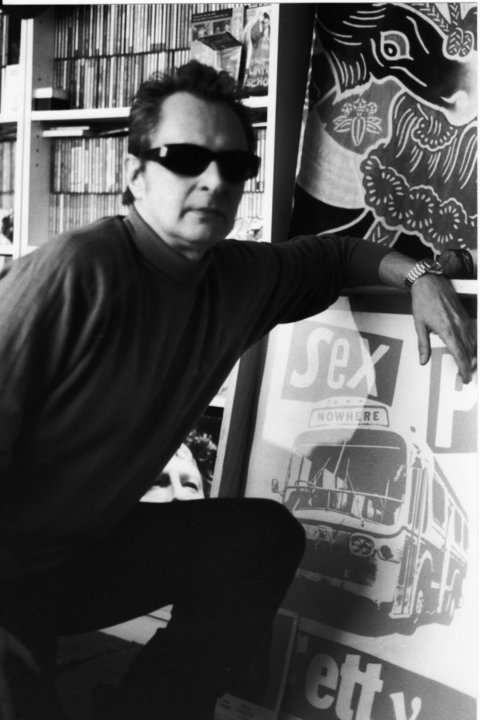
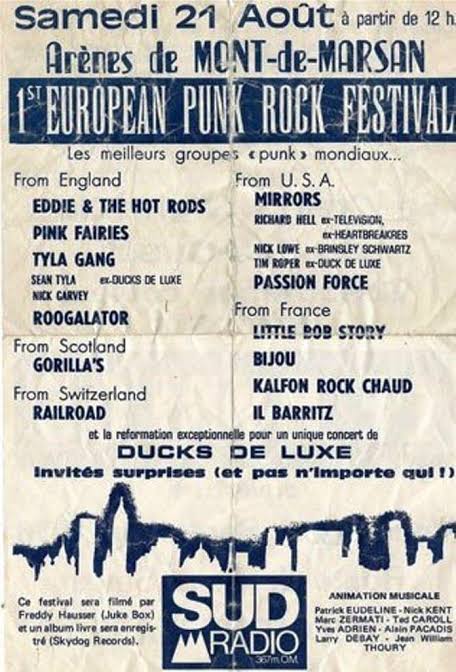
Eric Débris: Even at the first French punk festival at Mont-de-Marsan in August 1976, you had The Damned, The Hot Rods and other bands who weren’t necessarily punk. The Hot Rods definitely weren’t a punk band. It was sort of trying to get something going without enough material at the time. But that was fun because it really was the beginning of the scene. We became friends with The Damned at Mont-de-Marsan.
We were part of it because we were there first, even though we hadn’t yet played with Metal Urbain. Claude Panik and I were particularly involved in that scene.
The Sex Pistols Play Paris

Photo Credit – Pascal Régoli
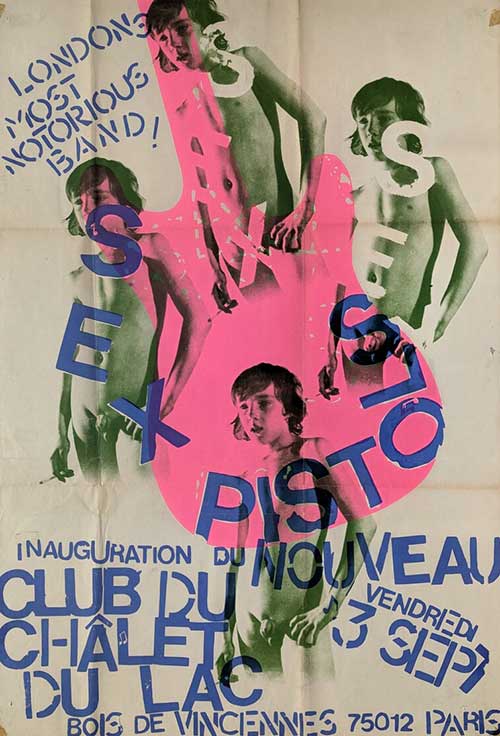
The gamechanger, like for so many others, is the Sex Pistols playing Paris. Pierre Benain had been writing and photographing for French music magazine Rock & Folk. On his frequent visits to London, he discovered Malcom McLaren and Vivienne Westwood’s shop Too Fast to Live too young to die, which later became SEX. Soon after, as a contributor to Rock News, Benain was introduced to Malcolm McLaren and was asked to promote a Sex Pistols gig for the re-opening night of the Châlet du Lac club from a disco to a concert venue.
Great memories of the night recalled here.
Eric Débris: Yes. We saw them at the reopening of the Chalet du Lac in September 1976. We were at Open Market almost every day and someone said, “Hey guys, you’ll probably like that,” and gave us invitations to see the Pistols at the opening.
It was a fantastic gig, especially in a club and with tons of people. The Bromley contingent was there, along with a few dozen French punk rockers from the early scene. The rest of the audience had basically been invited for the reopening of the club.
The paint wasn’t even dry yet from the club refurb. There were people walking around with big marks of black paint on their bodies and clothes!
Debris and Panic hotfoot it to London
It was really burgeoning in London. It was still very small, basically people around the Bromley contingent and people like that. We went to a Bowie night at a club in Soho. I think it was Crackers. The Bromley contingent were all there – Siouxsie, Billy Idol and all these people. They were dancing to Bowie and Roxy Music and stuff like that. We were part of that without really knowing what was going to happen. We basically found out that we were part of a movement.
They also took time to visit McLaren and Westwood’s SEX shop in the Kings Road.
Eric Débris: I bought some vinyl trousers, and Claude bought trousers and a few other things. What I remember are the trousers Claude bought. They were supposed to be for women, but they looked good on him, so he bought them.
They didn’t have my vinyl trousers in the right size when I wanted them, so they made them to my size. I came back a few days later, and Vivienne was there again and made the final adjustment to them. I would wear them for our first gig.
Debut Gig & Cobra
Keen to progress, and with still a no-show from Rochline, the answer to a singer was right in front of them in friend Claude Panik, who described seeing the Sex Pistols as “The greatest revelation of my life…my first incentive to go on stage…” He joined in November, and they were off with a memorable first gig in December 1976.
Eric Debris: We applied for a talent showcase at the Golf-Drouot, which was basically a song contest. Anybody could say, “We want to play,” and they would give you a date, and you could go on stage and play.
They managed three rehearsals, did a cover of Anarchie, wrote lyrics to Snuff Movie, and at the end of their last rehearsal came up with the name Metal Urbain.
Armed with the sound of the Sex Pistols meet Suicide and an equivalent look and attitude that made them France’s first real punk band, Metal Urbain took to the stage suitably intoxicated, and ready to do battle against the old order. Debris was clad in his vinyl pants as per below! Photo credit: Charles Duprat.
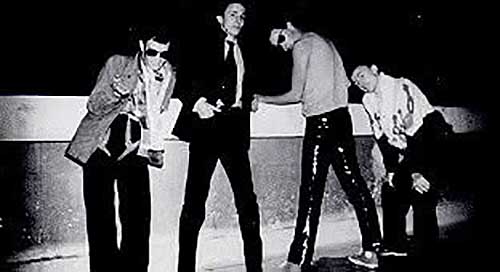
Eric Débris: We had maybe ten friends there, basically Asphalt Jungle and a few other people. The rest of the audience were into Genesis and that kind of music. There were tons of French bands playing at the Golf-Drouot, but they were playing progressive rock or very traditional rock.
I remember we started playing our first song, Snuff Movie, and people were backing away because we were playing super-loud, with a lot of high-end. After a few songs, maybe the third song, someone tried to grab Claude by the hair – but he had short hair, so they couldn’t! Then they started throwing things onto the stage. We were at the front of the stage going, “Come on! Come on!”
Ricky Darling took his guitar and was ready to hammer someone with it. Zip Zinc jumped into the audience with the singer’s microphone stand and started punching people with it. Eventually, it was stopped just before we were about to start our fourth song Anarchie en France
The guy running the club, Henri Leproux, came up to me and said, “That was fun, guys.” He had opened the club back in the early ’60s for early rock ‘n’ roll. That’s where Johnny Hallyday and Eddy Mitchell and people like that started. At the time, the people going to the club were the early French rockers – leather jackets and all that. They were fighting all the time. For him, it was like going back to the old days. He had this crazy smile and was saying, “Yeah, guys, that’s the best.”
Because it was a contest, there was an article every month in Best, which was one of the two main rock magazines in France (Rock & Folk was the other). Usually, it was about the band that won the contest. We didn’t win, but the article in Best ended up being about us with the headline ‘Bravo Panik!’. The guy who wrote it was working for Cobra, a record company, and they contacted us almost immediately after that gig.
Cobra was a French record label and subsidiary of Cezame Music, established in 1976, that released rock, electronic, and experimental records.
In contrast to the UK punk scene, which was taking off from January to March, the next Metal Urbain gig wouldn’t be for another three months, in March. By then, their look and sound had been refined. At the gig at the Théâtre Mouffetard at the time of municipal elections, they turned up in painted clothes with straps, and their voter registration cards pinned to their jackets, defaced with anarchist symbols. In the meantime, Debris and Panik had visited London again in February, taking in a week of gigs at the Roxy Club.
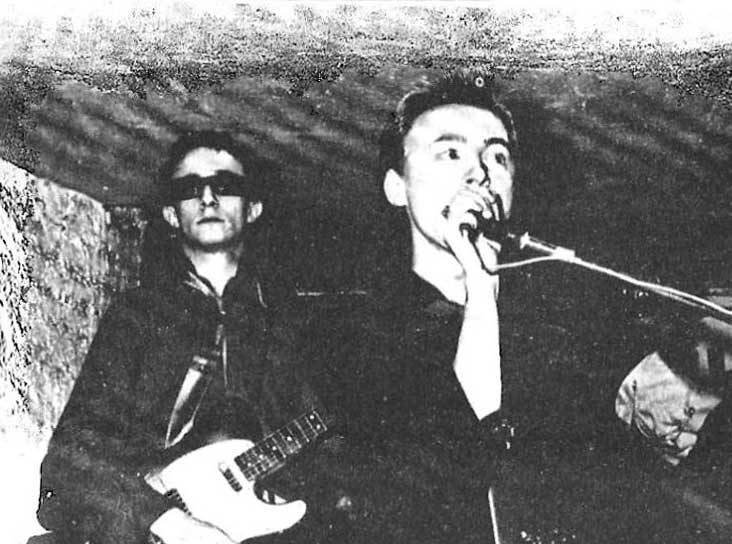
Rikky Darling & Claude Panik – Photo Credit: Didier Gal
Eric says they were in no rush to record, but IMHO that was a mistake. Yes Polydor had signed Stinky Toys early on and released their first single Boozy Creed in April to a critical mauling. Rikki Darling and his other band, Asphalt Jungle, got signed first by Cobra at the end of 1976 and released their first single, Deconnection. While in France punk moved at a snail’s pace (sic), in the UK, the punk scene was accelerating and releases proliferating.
An interesting sideline. Just prior to Debris & Panik visiting the Roxy Club, Patrick Eudeline of Asphalt Jungle had written (very politely) to Andy Czezowski detailing his band, Metal Urbain and Contingent Anonyme, with a view to them playing the club. Sadly, it never happened.

Photo from Andrew Czezowki/Susan Carrington Roxy Collection
About six months later. We did another gig in Paris where the boss of Cobra came to see us. He came in while we were already playing. He listened for a while, then went outside for five minutes and came back. He was blown away. He was basically going, “What are they doing?” It was this wall of sound. After that, we started talking about signing with them.
We weren’t in a rush to record and release a record. We heard some rushed records and didn’t want to sound like that. Cobra was offering good recording conditions and total artistic control. What we didn’t know at the time was that the size of the record company matters.
Eric Debris: We knew we’d be able to sign with Cobra, we weren’t really keen on looking for another company… We didn’t want to sign with a big company like Stinky Toys with Polydor. We knew very well what we wanted to do and that we wouldn’t be able to do it with a big company. Punk: Seventeen Rock, Stephane Pietri & Alexis Quinlin, Regine Defarges, 1977
In May 1977, Hermann Schwartz and his brother Nancy Luger (aka Jean-Louis and Patrick Boulanger) join as Rikki can’t sustain being in Asphalt Jungle at the same time. Both were friends of the band and had played in their own bands like European Sons, whose songs at first sounded like Lou Reed’s Metal Machine Music and then the Velvet Underground’s Sister Ray. They were also in Strike Up with a sound like the Stooges & Velvets infused with New York punk. In June, Zip Zinc also leaves to concentrate on his radio job.
This will be the classic lineup that will record the three singles.


Strike Up late 1976
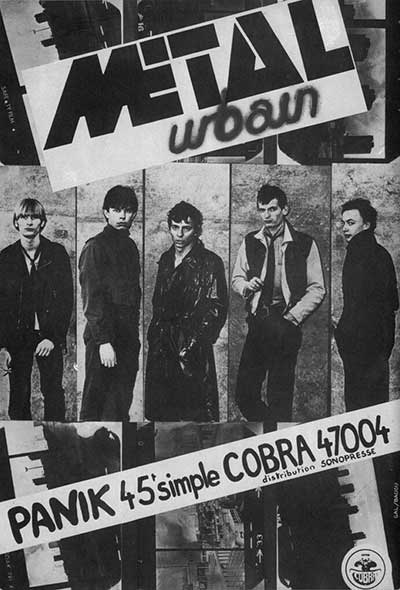
Eric Debris: You sign to a record label because they are really into what you are doing. The only problem is that the record label is not a major. But they give you whatever you want to record your record and then the distribution is so-so and the promotion is so-so.
At the same time as it was released, Cobra started to have problems with the distributor, which was trying to bankrupt them to get the catalogue back. We got caught up in all that and ended up, at some point, with a meeting with the people who were doing the distribution, trying to get us to sign with them. So it was all a bit of a mess.
If we’d waited a few more months, we probably would have signed with one of the three majors in England, and everything may have been different.
Surprisingly, the single was played on national radio and they featured on TV in all their glory. The performance below is IMHO the equal of the Sex Pistols doing Anarchy on the So It Goes TV show.
Eric Débris: The first one we did was one of the few TV programmes at the time that was talking about the new movement, punk rock and all that. They invited a bunch of people to talk about it and needed a band. The press officer at Cobra found us and got us onto the programme.
It was fun because a lot of people saw us on that television show. I remember walking down the street a few days later and a guy on a bicycle stopped and said, “I saw you on TV!”
In late 1977, just after Panik was released, the first book surprisingly to be published on Punk Rock was in France called Punk: Seventeen Rock by Stephan Pietri and Alexis Quinlin, which detailed the US and UK punk scenes before some extensive pages on Stinky Toys, Metal Urbain, Asphalt Jungle and 1984. Quinlin was an interesting character, managing both Taxi Girl and Guilty Razors and accused of swindling both. He then went to the States and made millions before being convicted of swindling money and deported back to France. The book is very good indeed.
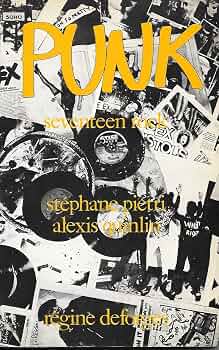
Back cover: Anti-rock, anti-pop, anti-folk, they make anti-music. Anti-bourgeois, anti-proletarian, pro-Stalinist or pro-Nazi, darlings of disgust, they manifest themselves in London, in New York, in Paris, they are the Punks.
They emerge from all over France with their safety pins for crowns, their razor blades as pendants, rifle butts in the air, terrifying a society of which they are the mirror, a witch. They are ugly or hideously beautiful; they wallow in beer vomit, they change sides indifferently, from students to riot police, they play with the symbols of the swastika, the hammer and sickle: they invent enormous hoaxes. Their war is one of bursts of laughter and anger more than of bomb blasts. Natural and failed children of a monstrous coupling, that of surrealism and consumer society in crisis, they face the – no future…. Of a frenzied, bizarre, cruel exhibitionism. Violent. Savage. Numerous. Uprooted. Ready for anything.
French Lyrics & Design
To be honest, you couldn’t imagine any clichéd lyrics to accompany Metal Urbain’s music. It was made for Punk rock and political themes. You also have to admire their whole approach, from the sound and look to singing in French when rock ‘n’ roll was sung in English. But it would be a double-edged sword. The band would end up not breaking in France, but gaining success in England on English labels singing in French to a country that couldn’t understand them, which would then put them at a disadvantage.
Eric Débris: With the lyrics, we didn’t want to do all the traditional rock stuff – “my girlfriend left me” and all that. We wanted to do something more science-fiction-based or whatever. We were also into politics and early on, we started writing songs about things without necessarily taking a stance.
We’d say, “We’re pissed off with that,” and people could do whatever they wanted with it. We also wanted, unconsciously, to do something non-temporal. We didn’t want the songs to be linked to a specific event or a specific person. There are lots of protest songs where people mention a president by name. The problem is that twenty years later the song doesn’t make sense anymore.
We wanted to talk about what was pissing us off – the way the State and police work, or people and society – without making it about something very specific. That’s why it still works now. People say that even fifty years later the things in our songs are still relevant.
I’m a graphic designer, so I did all the sleeves myself. The provocative imagery and heavy use of black and red were deliberate. I liked playing with political references, whether Anarchist, communist or some far-right imagery. The aim was to expose and criticise it, not endorse it.
The problem was that some people misunderstood and thought we were on their side, which we weren’t at all. At the same time, people on the organised far left also embraced it, and we realised the message wasn’t landing the way we intended. After that, we started to adjust things because the wrong people were reading it as support. It was more subtle than they understood, and they missed that subtlety.

[To be fair, to the public their early wearing of swastikas and punks’ association with it, plus their early throwing of nazi salutes at concerts wouldn’t have helped any confusion!]
The whole idea was that we were French and would sing in French so that the kids could understand what we were saying. At the time, everybody in France was singing in English, but they were writing in bad English. They were writing what they could write rather than what they wanted to write because it wasn’t their language. French is my language. I can work with it and play with it.
Claude Panik: I figured if Johnny Rotten could get on stage in England, I don’t see why I shouldn’t have the same right and an equivalent in France… to say the same things in French… Let’s stay French… let’s build French!!! Punk 17, Stephane Pietri, Alexis Quinlin, Regine Deforges, 1977
In Metal Urbain, we played with words, even making up words that didn’t exist in French because they were the words I wanted to use. There’s a French writer, Huysmans, who did the same thing. When he couldn’t find the right word in French, he would make one up. There’s even a dictionary of all these words because he invented so many. When you read his writing, you don’t necessarily notice that the word doesn’t exist because it works within the sentence. It’s much easier to do that in your own language. I love being able to work with words like that.

There’s also something interesting about the French language. I had an idea about this and later found it explained in a book: French works around a different rhythmic structure. English works very well with rock ‘n’ roll because it’s basically a binary language that works on four-time. French works more naturally in three-time, like a waltz.
So it’s really difficult to put French lyrics onto rock ‘n’ roll unless you understand that and start playing with the sentence so that it fits the rhythm. French is also perfect for reggae because of the offbeat.
Left – Paris Maquis translated into English
The Roxy Club & Playing Live
In June 1977 they were contacted to open for the Sex Pistols tour, but the furore over the Jubilee and being banned meant that was all put on hold – what amazing gigs they would have been! Debris and Panik had already visited the Roxy Club in February that year, but as a band played there in November themselves.
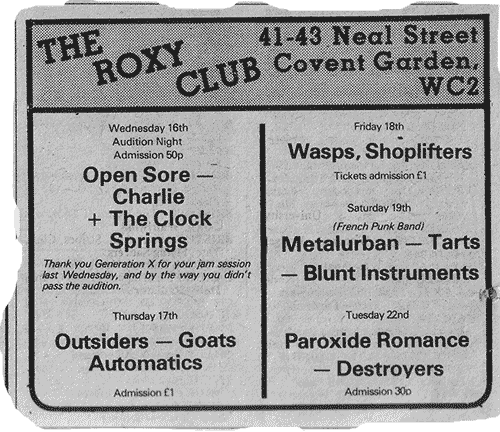

Eric Débris: We ended up being booked at the Roxy and also the Vortex. But it wasn’t the same at all as when Andrew Czezowski was there. The people running the Roxy and the Vortex at that time were very dodgy people; typical English mob types. The guy running the Roxy was Kevin St John, an ex-boxer, I think, and the people running the Vortex were ex-Army or mercenaries.

The gig at the Roxy was actually okay, but Kevin St John, the boxer who was running it, decided not to pay us because we were singing in French. I don’t know what we were meant to be paid — probably peanuts anyway. Rough Trade said, “We’re not arguing with him,” because they knew he had gangster connections. With people like that, you say, “Okay.” Later, living in London and meeting these kinds of characters around the West End and Soho, I understood that sometimes you simply don’t argue.

Rough Trade & Radar
The single sold well in England and particularly through the distributor Rough Trade that had a well known Record shop in Notting Hill. RT had heard the first single on John Peel and got in touch with Cobra to start distributing it in England. The result was the band started to become better known and received in England. than in their native country.
We actually played more gigs in England than in France. In France nobody really cared about us. We played a lot at the same place, like the Gibus. When we played there, we played for a week, and we did this three or four times. There were a few other places in Paris, but we couldn’t really tour France. It was still frustrating that we couldn’t really do the same thing in France that we did everywhere else.
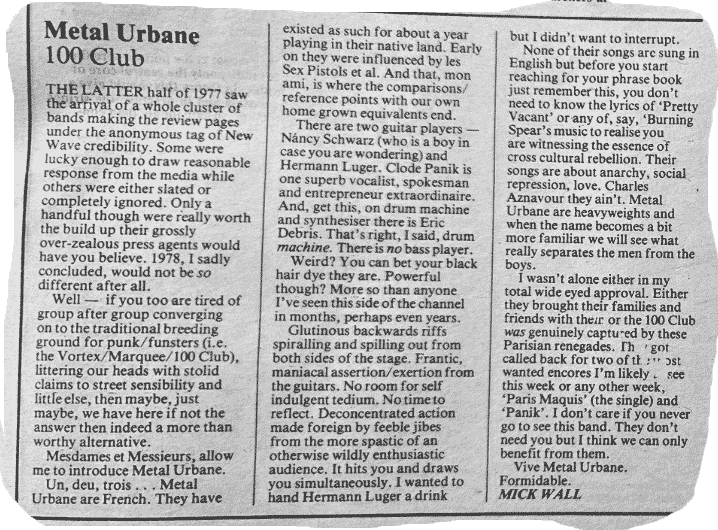
Enthusiastic Review from Sounds 14.1.1978 from the 100 Club – But could no one spell their name right?
A first for a French band was when they recorded a session for the influential BBC 1 John Peel radio show, which was predominantly featuring punk and reggae music every weekday night. Around the same time, they had a major features in two influential magazines. One was in the punk magazine/fanzine Search & Destroy in the US (with silly and somewhat puerile answers) , and the other in the weekly UK music paper Sounds, where they aired multiple grievances.
Most of the punk bands say they want to change things then have the same line up as the old farts…There was a punk scene in Paris but it is dead now..Asphalt Jungle, Gasoline..have taken the spikey hair and lie they have no money in their pockets. Like Generation X they have nothing to say. The music business in France is only MoR….there is only one club in Paris we can play…There are no weekly music papers…only two monthly colour magazines..they see punk as only an English thing…French rock ‘n’ roll to them is Little Bob Story.
We are here to show people that it is possible to do things without compromising – we have been offered big record deals but have refused them although we need the money. If you do not compromise, you can do anything, on stage or on the street. Sounds, 21.1.1978
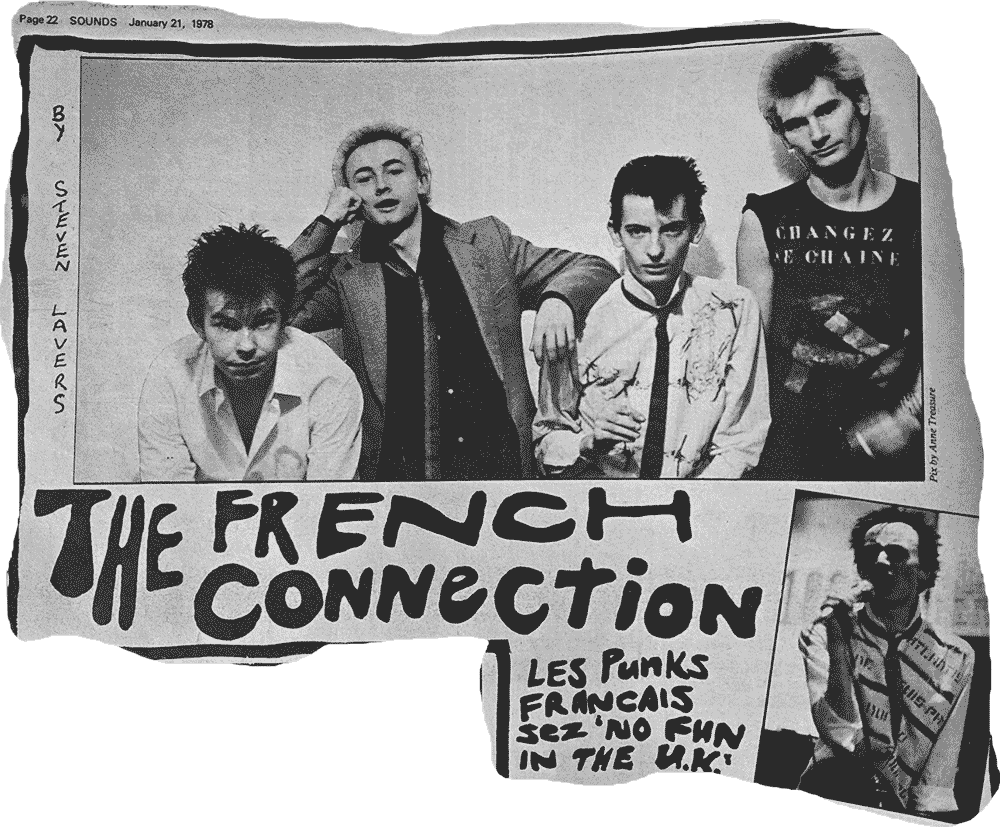
Throw in a couple of slights at the Clash and Sex Pistols for going back on promises, and they had pretty much covered all the bases! Except for one, which was the single by Plastic Bertrand Ca Plane Pour Moi, which had become a big hit across all Europe and England. For them, they saw the song and Bertrand (described as the French Johnny Rotten) as a media creation and a means to turn punk into a joke and kill it.
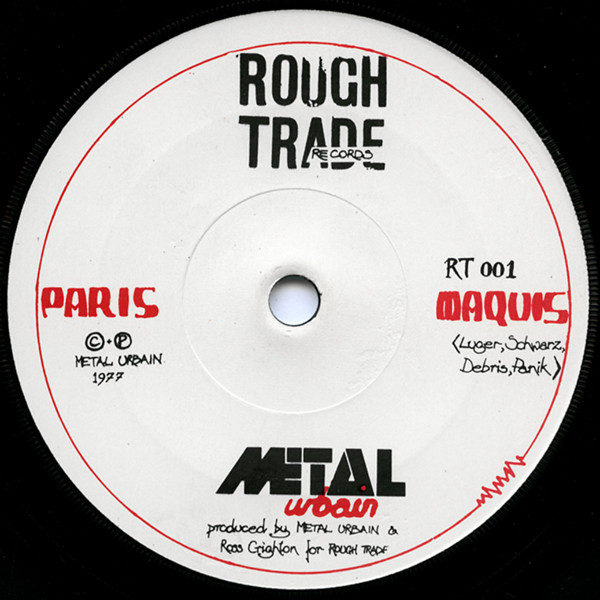
When the band visited London, they walked into Rough Trade, introduced themselves, and asked if they knew anyone who could release a couple of songs they had written. Geoff Travis, who owned Rough Trade and who was looking to start making records, took them into the back room and agreed to release a single on Rough Trade Records. That single was Paris Maquis.
Then we signed with Rough Trade, which also wasn’t a major. It was fun to be the first record on the label, but they basically started to learn what to do with us, so that was also a problem. But it sold; Rough Trade pressed 10,000 copies of the first one, and they all sold out.
The release on a UK label also provoked a reaction that puzzled the band.
It was strange; when we released the single in England, there were basically only two magazines in France and one of them didn’t even review the record because it had been released for the English market.
Rough Trade deals were typically one-offs with a very artist-friendly 50-50 split on profits, but they didn’t give advances or the usual. Alex Ogg, in his book Independence Days, claims a second single was rejected when the band submitted a pornographic cover as artwork. While RT were known for their holier than though approach, this seems improbable. It’s likely Metal Urbain’s next move may have been as a result of Mayo Thompson of avant-garde sixties noiseniks, the Red Krayola. He was producing and collaborating with Rough Trade and involved with Radar, who was re-issuing their first album.

Radar Records had been set up in late 1977 in the UK as a joint venture formed by former United Artists executives Andrew Lauder and Martin Davis alongside Stiff Records co-founder Jake Riviera. Hystérie Connective / Pop Poubelle was released at the end of September 1978.
We had more money to record the second one and went to Olympic Studios. We had rehearsed in Andy Czezowski’s basement rehearsal studio in Hanway Street, where PX was the day before, so we were ready. We were supposed to record in the small Olympic studio, but we ended up in the main room – the room where The Rolling Stones recorded albums like Beggars Banquet.
We recorded and mixed it in one day. We had a really good engineer, Doug Bennett, who worked with The Stranglers and Hawkwind among many others. The engineer on the first Rough Trade record, Tony Platt, was the engineer on AC/DC albums. We did a lot of stuff with people who went on to do bigger things (laughs).
This looked to be a good move but quickly turned sour. Like with Cobra, there were underlying pressures.
We thought we’d get better distribution because Radar was part of Warner and all that. The problem was that a few months later Warner folded Radar. The thing is, they pressed something like 5,000 copies, and they sold almost immediately. But there was never another pressing because Warner was cutting the money to Radar. I went to Radar Records and said, “We want to record an album. What can we do?” The answer was basically that they couldn’t and had no plans to put any more money into it.

Panik was getting more and more frustrated and eventually left. There was another reason as well. He was in the band partly because he looked like a singer. That’s why we got him into Metal Urbain. But because he looked like a singer, he also wanted to be a singer. He wanted to be Marc Bolan or David Bowie or somebody on his own. That’s part of the reason he left. There was a chance that if Panik had stayed in the band, we might have continued and recorded the album.
On December 10, 1978, exactly two years after the legendary, tumultuous concert at Golfe Drouot, Clode Panik announced his departure from the band after a show at Gibus.
Photo Left – Claude Bus Palladium – Credit: Lilliane Vittori
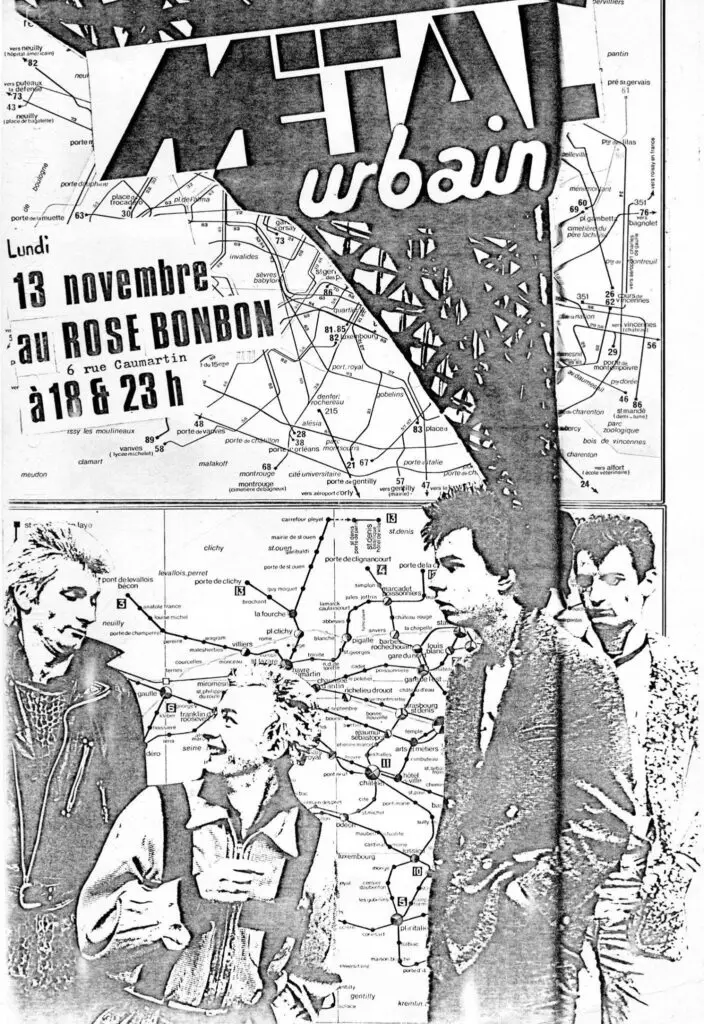
On the 31st of December 1978, METAL U appeared as a trio at a concert at the Rose Bonbon with Eric Débris on vocals who then became Metal Boys and then Dr Mix & the Remix who released records for Rough Trade. Panik never got a solo music career and left the business.
Legacy

It’s shocking that, amid all the 50th-anniversary celebrations of punk, so little has been done to recognise the seismic importance of Metal Urbain and their emergence as a defining moment in French music history.
Like Satie, Baudelaire, Rimbaud and the Situationists, they challenged the conventions of their time. Singing in their native language and rejecting the tired rock’n’roll template of guitars, bass and drums, Metal Urbain created something genuinely radical — a new, abrasive sonic language that was uniquely French.
They weren’t simply a French punk band. They were sonic disruptors and cultural revolutionaries. Their work belongs in the same cultural conversation as the barricades — and surely deserves to be celebrated somewhere like the Centre Pompidou.
Eric Débris: We didn’t fit the mould. We never did. In France there was an idea of the kind of band that should succeed, just as there was in England or America, but Metal Urbain was never in that mould. That’s why the Americans, English and Japanese preferred Metal Urbain to a lot of the stuff that the French intelligentsia thought should make it outside France.
When we’re dormant and don’t do anything, people say, “Metal Urbain! Fantastic!” The minute we start doing something, it’s, “No, no, no, we don’t want to see them.” They’re happy when we’re dead, but not when we’re active. And they’re going to be really pissed off soon because I’ve been working for the last two years on a new album.
I’m strictly on my own now. I don’t have a band. I’m using all sorts of tools and AI stuff. With all the tools I’ve got on my computer now, I can do what I wanted to do in the first place: make music without any human interference. So they’re going to be pissed off because there’s a new Metal Urbain record. They’re going to be pissed off because it’s in English. And they’re going to be pissed off because I use a lot of artificial intelligence.
Instead of recording like I would have done before, going into a rehearsal room with some musicians and trying to develop ideas, I can now take my ideas and use technology to do it for me. I’m more like a producer. I was an engineer and producer and I’ve always liked something Brian Eno said in an interview. He said, “I’m not a musician. I’m a fraud,” because Brian Eno doesn’t actually play music. He asks musicians to play. There’s an interview with Carlos Alomar where he talks about working with him. He was playing guitar and Eno would sit there and say, “That chord. Can you play it with the other chord? Can you do it that way?” Because Eno couldn’t play guitar, he had somebody else playing it. He was basically programming the musician.
I feel the same way. That will be perfect because we’ve been pissing people off since the beginning.
Discography
Just three singles and that’s it, but my god all three are absolute peaches. The birth of electro punk. Thank god again for BBC Radio 1 DJ John Peel, who gave them two sessions, which I think is a first and last for a French punk band. All the singles, John Peel sessions, plus some demos are collected on numerous compilations that have appeared throughout the years.
Panik / Lady Coca Cola – Cobra Records October 1977

No ifs, no buts, this goes off like a nail bomb. Double treble guitars at Stooges stun level, spasmodic drum machine, urgent distorted vocals screaming about anarchy and killing the president (see excerpt of lyrics below). The atonal solo is worth the price of the single itself. Nothing has been heard like this before in French music or any music, come to think of it. The fact that it was played on official radio and TV stations in France is mind-boggling. As incendiary as ‘Anarchy In the UK’. Magnifique!
Explode, electric
Mutant, mechanical
You assault the city
You rape, you destroy
Panik (Metal)
Panik (Metal)
Panik (Metal)
Panik, ANARCHY!
You rob the president at gunpoint
Blow his face off
Red, red, red and black
Deflated doll
Panik (Murder)
Panik (Murder)
Panik (Murder)
Panik, ANARCHY!
Paris Maquis/ – Rough Trade February 1978
The first on Rough Trade and another cracker with a chorus underpinned by what seems a jumbo jet taking off.
Jon Savage wrote in his weekly singles review for Sounds 3.10.1977
The reaction starts. The world has looked to the UK and punk: now some energy source has dried up and become sour through ceaseless repetition exploitation. Fresh impetus arrives from abroad. For a country whose main claim to rock fame has been Johnny `Aliday (they’re too busy diverting their energy into political channels for rock’n roll) this is impressive. Two guitars slicing riffs at counterpoint, battling over synthetic percussion and angry singing. Production gets a wall-of-sound effect usually lacking. Some real freshness and excitement, conviction breathed into areas growing stale, and moving on. The words are all in French, which could be a problem, but considering most hear records as sound it don’t matter.
In an interview with Sounds 21.1.1978, they explained
It is very dangerous to look like a punk in Paris because this is not the accepted fashion, ‘Paris Maquis’ is about this sort of thing. All the straight people who don’t say nothing, but if you gave them guns and told them they could shoot us they would. Fascists.
John Peel – 16th January 1978
Eric Debris: It was fun. We recorded four songs for the first session.
There was one song we couldn’t record. We were going to do Lady Coca-Cola, but they said, “No, you can’t do that because it would be advertising and you can’t do that on the BBC.” So we did another one.
We recorded everything and when we went to do the mix, there was a producer there. He started working with the engineer and I went, “No, no, no, that’s not our sound!”
The producer was starting to use delay and things and basically making us sound like The Ramones. The Ramones are fine, but we don’t sound like The Ramones.
We started arguing and I said, “No, no, no. I’m going to do the mix.” The guitarist, Pat Luger, went next to the tape recorder with a cigarette lighter.
The producer looked at him and went, “Okay guys, do whatever you want.” So, I mixed it with the engineer and made it sound like Metal Urbain.
John Peel – 11th October 1978
We came back a few months later to do another four songs. The same producer was there, but this time he sat at the back reading a newspaper all day. Basically, “Get on with it, guys. Whatever you want.”
Hysterie Connective / Pop Poubelle – Radar September 1978

Their third and final single and the third record label in a year. It’s another banger and is one of their earliest written tracks from 1976. Recorded and mixed in 24 hours! By this time punk had moved on; but had Metal Urbain?
UK Subs meet Hawkwind in a weirdly catchy, danceable way with an almost Kinks-like solo nestling in the noise and electro.
Described by Danny Baker in the NME as “The drum machine is cheap and fails to ignite even the most laboured of riffs.” then delivers a casual bit of racism: “The French language sounds jumbled and ugly at the best of times without chocking over this bore. “ NME 7.10.1978. Jon Savage in Sounds said, “Metal U mix electronic bleeps and a rhythm machine with fuzz guitars and a strong riff. Make a solid noise.”

TalkPunk
Post comments, images & videos - Posts are checked and offensive or irrelevant ones will be removed