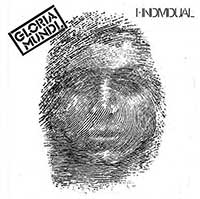
Gloria Mundi

Their live performances were enthralling. They were like the illegitimate child of the Sex Pistols and Genesis. Facebook Quote
Emerging from the UK’s underground, Gloria Mundi were never just another punk band. Formed in 1975 in London by Eddie Maelov and Sunshine (Valerie Patteson), Gloria Mundi began as an ambitious sci-fi rock opera concept before evolving into one of the more distinctive acts orbiting the early punk movement with a reputation for a visually arresting live show.
Picked up by major label RCA, they released two albums and two singles. Their debut single Fight Back and album I-Individual, both released in 1978, got some great press but didn’t lead to greater things. The band shed personnel and a second single and album, receiving no promotion from RCA, dropped off a cliff, and Eddie and Sunshine quit.
Described by Ultravox’s John Foxx as “The first London band with a synth. They were Germanic noise-electro before PIL or Joy Division, Goth before Siouxsie, New Wave before New Wave.” You can add to that Post Punk before Post Punk! John Robb says in his Art of Darkness book, “Gloria Mundi are one of the great lost bands of the scene.”
Yet the band is strangely and criminally omitted from punk histories and reference books like Gimarc’s Punk Diary and The International New Wave Discography by George & Defoe. Shame on you!
This Punk77 entry puts that right!
Early Days
The story starts in 1975…
Eddie Maelov: I was in London around 1975 when I decided to form a band with my partner, Sunshine (Valerie Patteson). Our idea was to create a rock opera—we had the story [based on the book The Game Of Rat & Dragon] and characters but no music.

A friend of mine came up with the name Eddie Mylove. I changed it to Maelov and made up a back story that I was from White Russian emigré parents who had escaped to Paris!
We advertised in Melody Maker for musicians, describing it as a science fiction project. John Foxx, who later founded Ultravox, responded, but he was starting his own band at the time. We said fine, and if he wanted, we could add some stage performance visuals for the band’s gigs. So, we soon found ourselves on stage with Tiger Lily, as Ultravox! was first called.

John Foxx had first chanced upon the pair in 1973 when, upon answering an ad in the Melody Maker for someone to collaborate on a ‘vague, wayward sounding, science fiction/music/theatre project’, and they more than made a first impression: “Eddie and Sunshine looked great,” remembers John, “Very skinny, white faced, dressed from Oxfam in old fox-fur coats, bleached and dyed hair… They were wayward, intelligent, fierce, and they looked it. You couldn’t help but be impressed.” Ian Fortnam Interview
Left – Proto punks – Sunshine & Eddie 1976, Butlers Wharf warehouse rehearsal space next to Tower Bridge
Eddie Maelov: As the opera wasn’t happening, we decided to form a band. We first found Ice (Roland Oxland) on bass on the recommendation of his friend Ultravox guitarist Stevie Shears. They had both played in a band called Yours. We then advertised for more musicians in Melody Maker and held auditions.


Then they auditioned for a guitarist and drummer. Mike Nicholls, who was likely a session drummer had played on the LP Snap by the terribly named pop duo Scrounger and, more significantly, on Bob Calvert’s second solo album Lucky Leif & The Longhips in 1975.
Eddie Maelov: Mike was a bit older but very dependable and refused to have a stage name (laughs)


On guitar was Stevie Forrest, who had played guitar with the glam band Silverhead; a kind of mild UK version of the New York Dolls led by Michael DeBarres
Ice: He was one of the more interesting people who turned up for an audition. He rehearsed with us for about a month, and it was a mutual decision with Ed and Sunshine that he didn’t fit. He left and wanted me to join him, but I said no.
He was replaced by Pete Vas.
Ice: He was one of the more interesting people who turned up for an audition. He rehearsed with us for about a month, and it was a mutual decision with Ed and Sunshine that he didn’t fit. He left and wanted me to join him, but I said no.We then picked up Pete Vas, aka Beethoven, on guitar. He had auditioned for the Sex Pistols in 1975 but got turned down.
Eddie Maelov: His family were Hungarian, and they’d managed to escape when the uprising happened in 1956. I loved his guitar playing – it was rich and powerful; he combined melody with anger and desperation; his phrasing was spot on.
Vas’s father was Robert Vas, an influential Hungarian-born filmmaker who fled to Britain after the 1956 Hungarian Uprising. He became a vital figure in British documentary cinema, directing acclaimed, deeply humanistic films for the BBC and the Free Cinema movement. A troubled figure, he’d witnessed Jews being shot and dumped in the Danube while living in the Budapest ghetto. His mother committed suicide, and his father had gone to Australia. No wonder he received psychiatric treatment.

When punk went overground in late 1976, bands began to change by speeding up, going more basic and shortening hair and the width of trousers. Ice & Beethoven caught the Damned at a packed Hope & Anchor, and Ice liberated a toilet chain from there and wore it round his neck!
Ice: Ed had some songs he could play me on the guitar, and I wrote the bass lines and helped out with some of the arrangements as we went along. It was no more complicated than that, really. At the point when Anarchy in the UK was released, I think things did change. It became more focused and more aggressive. Some of the more theatrical songs we were doing got dropped. The songs became more condensed, and the whole set and live show became harder-hitting.
Eddie Maelov: Hard to remember, but there were some songs I wrote that I think we rehearsed early on, but I can’t actually remember if we performed them. Titles: Young & Yearning for Love; Cinematheque; Fantasia; Libido Lido. We aimed for aggressive rock when we started – punk hadn’t emerged yet.

Glori Mundi weren’t your average 1234 band – Take their name. Yer average Sham 69 would struggle with that!
Eddie Maleov: Sunshine and I brainstormed names and picked one from the Latin phrase “Sic Transit Gloria Mundi,” meaning “thus passes the glory of the world.” The name was meant to be ironic, but most people assumed we were a female singer (Gloria Monday), so it backfired a bit (laughs)
Punk Gigs & Reading Festival
The band’s first gig, according to the Reading Festival programme was at the Rochester Castle in Stoke Newington in the summer of 1976, where they were pelted with bottles. They also played at the Hope & Anchor in late 1976, which they would go on to play several times and at which they met a key punk player.
Eddie Maelov: We were surprised to meet the Clash’s manager, Bernie Rhodes, who had a go at us, but seemed to appreciate our aggressive approach. While we weren’t part of the punk scene initially, we admired its attitude. Previously, I’d been a hippie embracing peace and love, but after that didn’t work out, I became frustrated and looked for a new direction.
Other places played were Upstairs at Ronnie Scott’s, the Rock Garden Covent Garden and the Music Machine. A residency was secured at the Bridge House in Canning Town where one night some surprising people turned up to see them.
Ice: I remember Sunshine saying there was Johnny Rotten and one or two of the others in the audience to see us play. I don’t think they knew what we were, but they wanted to check us out.

Evening Standard 04.08.1976
In August 1976 saxophonist CC, aka Chris Cullen (below left with Beethoven – Picture credit Len Hooper) joined the band. Amazingly, band members interviewed thought he joined over a year later!
Eddie Maelov: (Chris Cullen): probably the most enigmatic member of the band. I knew him through some art school friends, but not very well. We’d been gigging as a 5-piece for a while when he got in touch and said we should add him to the band as a sax player.
I was pretty surprised, but couldn’t think of a reason to say no, so I agreed for him to come and rehearse with us. He turned up wearing his customary dark glasses and fitted in musically straight away. To me, he always seemed like a ‘40s jazz muso who was trying out a different genre.


Adding sax into the mix gave the band another dimension, and along with Suburban Studs were the earliest new wave band to use the instrument. It also added another personality into an already fairly combustible band mix and stage show.
Len Hooper (Photographer) I did the portraits for them, trying to bring out their strong but very different personalities. Eddie and Sunshine were fairly close. Ice, like his name, was a fairly distant character. Beethoven was a nightmare. Mike was just a typical drummer, and C.C. was a very enigmatic character on saxophone; he was in the background in sunglasses and barely moving, but he had something about him that drew people in and got their attention.
They played gigs at the punk meccas the Roxy Club, first playing audition night on June 22nd with The Shoplifters, then supporting The Saints & Mean Street on June 25th and a couple of headline gigs at The Vortex.
Eddie Maelov: The Roxy and Vortex were both small, dark, sweaty and pretty aggressive, but that was the punk vibe. If they gobbed at you, they liked you!

Gloria Mundi were prolific giggers around London -three bands from these ads will feature later in their story – Mean Street, Stretch & Iron Maiden.


Just before their audition night at the Roxy club, Eddie and Sunshine found themselves victims of the Punk Ted violence that was prevalent mid-1977 in the Kings Road and other areas. Described in a London Evening News feature by John Blake (June 18th 1977) as a ‘moderately successful punk band’ and kindly pointing out the ‘girl’ Sunshine, they were subject to an unprovoked attack, with Sunshine punched in the face and Eddie getting a cracked rib.

But The Marquee in Wardour Street was where they made their mark. They proved a popular draw and had a strong supporter in resident DJ Jerry Floyd. As early as March 1977 they had regular gigs with support slots to Generation X, Neo and Ultravox as well as headlining themselves.
The Marquee gigs got them the opening slot at Reading, a rock festival traditionally. Ultravox also played later on that same day. Somehow, they came out alive.

Eddie Maelov: The Marquee was bigger, felt more like home and we sold it out. The Marquee helped us get on the bill for the 1977 Reading Festival since it was influential in booking acts. We opened on Saturday and finished unscathed!
Ice: We drove out on Saturday morning, and it had been raining. When we got to the stage, wires were running through puddles of water. I didn’t do a headcount, but I would think even at that stage, there were probably about 5,000 people, and they were very very muddy already.
Interestingly, the festival program mentions Fight Back being released as a single on the day of their performance. The band remembers nothing of this, but they may likely have been planning to self-release a single. In any event, the single didn’t happen. What did happen though, was CC would be the first on vinyl playing on Ultravox’s Hiroshima Mon Amour and the Clash’s City Of The Dead, which was the B-side of their classic single Complete Control.


The band also played the punk circuit across the country from London to Birmingham to Liverpool playing clubs like Barbarellas and Erics and encountering the punk baptism of fire that greeted bands.
Ice: We did play a few gigs where bottles were flying around and also a lot of phlegm. There was one gig we did where we came off dripping with it!
Theatrics
So what was it about this curiously named band that piqued the interest of the Pistols and RCA in exploring some commercial potential?
Quite what Gloria Mundi were was/is hard to categorise, and they definitely divided audiences and critics. They could obviously play; the songs weren’t short (nearly half of them lasting over 5 minutes) and there was a strong theatrical element in a pretty impressive live show.

Eddie Maelov: Our music wasn’t just three-chord thrash—it featured a lot of theatrics. Seeing David Bowie was a huge revelation; he blended music and theatre, which inspired me to aim for strong visual elements in my own work.
You can see the appeal. Here was a band that mixed the old and new together and made punk acceptable (to their ears) and something they could relate to. This is borne out by the fans they attracted.
Ian Barnett (fan) Gloria Mundi seemed to stand out from all the other bands at the time. They weren’t afraid to experiment or be different, often incorporating elements from the bands and music their contemporaries were quick to cast aside as the ‘old guard’. I was always genuinely excited to go and see them. Email June 2026
Their live performances were enthralling. They were like the illegitimate child of the Sex Pistols and Genesis. Facebook Quote
Kieron Tyler (fan) I first saw Gloria Mundi in April 1977 at The Marquee. They were the support band to Ultravox! – the John Foxx Ultravox, who I’d seen four, five, six times before then. Maybe more.
Looking back, the pairing at The Marquee made sense. Arty bands in punk times, bands with keyboards, bands with some Roxy Music in them. Both, nonetheless, it was clear then, were at one with punk’s energy and directness. Neither could have been doing what they were doing at any other time. Before I came across them, I was vaguely aware of Gloria Mundi. An ad for a Hope & Anchor show billed them as “theatre rock.”
At that first encounter, I didn’t like them. They came on stage to a loud siren. The singer – Eddie – was in grubby bandages, which were unravelled. The female keyboard player – who turned out to be the co-singer – bellowed along with his bellowing. She was Sunshine. Most un-sunny on stage. Parping saxophone was like Roxy Music. A bright white light shone into the audience. Something about “condemned to be free.” All very full on for a support band. Theatrical, I thought.
I saw them again, and, well, something’s going on here. Another time, I was more familiar with the songs, the weird showiness – like during Split Personality. I became a fan. Kept seeing them. Email July 2026

Eddie Maelov: I used theatrical devices to give our stage show max impact. We had our own stage lights from very early on and used a lot of white light to blast both us and the audience. We chose grey as the band’s colour cos that was how the world seemed then. I’d come on stage wrapped in grey bandages that I’d unravel during the first number. Sometimes I’d make a noose to hang myself. I’d do some macho strutting, and Sunshine would put her hand down my trousers only to twist my balls and make me scream (female power).
…an unusual lighting set up run by two women. The lights always seem to do the unexpected: a searchlight beam will snap on and suddenly focus on the audience rather than on the band. It owes more to experimental theatre lighting than anything in music and is very effective. Miles, NME, 3/6/1978
Len Hooper was a music fan who, inspired by punk, took up his camera. He was drawn to the band initially taking photos from the audience at the Marquee, to taking their promo shots and first single cover. He also shot other bands like The Stranglers, Slits and Ian Dury, to name a few, and the photos were used in the weekly music papers.
Len Hooper (Photographer) Musically, they were tight and very rehearsed, which a lot of punk bands weren’t. They were also very much a theatrical band, and their use of lighting was unusual for punk at the time. It gave their performances a dramatic quality that other bands lacked, especially at the Vortex, where there was only basic strip lighting and no proper stage lights.
Ed and Sunshine, in particular, brought a strong sense of theatricality to both their repertoire and their choreography to build atmosphere. Once the audience arrived, the performance became more responsive, but that was the foundation of how it worked, and they fed off each other. This made them especially interesting to work with when shooting them.

Eddie (L) and Sunshine (R) – Credit Len Hooper
“Their act is fast and furious. It changes from night to night but always relies heavily on the tension between lead singer Eddie Maelov and keyboard/vocalist Sunshine. After one bout of their love-hate relationship, Eddie needed treatment for bruised ribs. It should be noted that Sunshine is a girl.” Reading Festival 1977 Gloria Mundi entry
Eddie Maelov: “We do knock each other around on stage. It’s not something we plan to do, it’s just something that comes out… “When we met, she was nursing a damaged foot from where Edie had thrown her down on stage the night before in Liverpool. Miles, NME, 3/6/1978
Eddie Maelov: She was a very serious supporter of women’s liberation and quite a formidable figure, though she was only 5’ tall! I always felt her vocals were more authentically “punk” than mine.

In fact, that was another first for the band. No band had used that twin male-female vocal assault with menace that Mundi did, and Sunshine and Eddie seemed visually interchangeable. No reliance on looks or sexuality, Sunshine was every bit Eddie’s equal on stage, whether singing or playing the synth/keyboards.
Eddie Maelov: We went on stage, and it was a performance from the minute we went on to the minute we came off. So I would say that although we were not really punk, we were certainly hard enough, if you like, visually and musically, to be considered that.
Ice: The stage was black, no light, we came on, and Ed would be swinging from a noose while sirens wailed. He’d learned how to do that. That kind of hard-hitting effect was typical of where we were at, including the white light that was shone into the audience.
Panache fanzine, run by Mick Mercer (later journalist at Melody Maker and Zigzag and influential Professor of Goth!) gave them an early interview
Eddie: What I reckon is, when you perform you should give a total performance. People pay money to come and see you. If they wanted to listen they’d stay at home with a record. So we’ve got to give a total performance. We’re all into performing. Something goes on. Which is incredibly fucking exciting. There are no real rules, except a few like when the lights go up, but people will come up and pull you offstage if they don’t like you, or cheer wildly if they do.” Panache #8 1978

Gloria Mundi – Electric Ballroom – Credit Len Hooper
John Foxx of Ultravox describes their performances in glowing terms.
I was also impressed by their use of black stage and harsh, white light.” John Foxx continues, “From the audience, it wasn’t at all like a gig – it was much more disorientating – you felt like a witness at a crime scene or a motorway pile-up. Violent shadows and sudden burning gouts of jagged noise, everything half-seen and outrageous, forbidden things going on… By now they were all smeared eyeliner and black and bleached hair, creatures from some grainy 1920s German expressionist newsreel directed by Warhol.” Ian Fortnam Interview
Indeed, they were, and Maelov’s look in particular pre-empted new romantics and goth.
The music press reviews were definitely mixed, with some hailing them as something new and others finding them too harsh or too theatrical, but they were ok with that as they’d set out to shake things up and be controversial. Love us or hate us.
[They] have too many concepts for audiences to understand and off stage don’t endear themselves to the rock press. Pete Scott Sounds 22.07.1978
Fanzine writers were always more perceptive, like Mick Mercer, who wrote in his fanzine Panache “Truly, a classic, under-appreciated band. They’ll either make perfect sense to you or no sense at all. Good Luck!“
RCA & Rod Smallwood

In Sounds of 7th January 1978, it was reported that the band had signed a 5 year worldwide deal with RCA on Christmas Eve. RCA was a major label and home to artists like David Bowie and Iggy Pop. They were brought into Tony Visconti’s studio in Soho to record “Fight Back,” Although it was produced by Colin Thurston (engineer on Bowie’s Heroes), the result was deemed too polished for Eddie Maelov and was ultimately rejected. They would re-record the single with Ian Bennett.
They also picked up a manager named Rod Smallwood, who had previously managed Cockney Rebel but had been nearly put off by Steve Harley’s and the band’s egos. According to Mick Wall’s Iron Maiden biography, Run To The Hills, Rod was brought in by RCA on a freelance commission to manage the band.
Ice: I think Rod saw Ed as a sort of punk David Bowie. What I do remember is going to Rod’s office in Knightsbridge to sign the contract. There were about 30 pages, and we all had to put our names to them. At the time, it felt slightly unreal — I was almost incredulous that we’d actually landed a record deal. It was a big company, and they clearly wanted to back a punk outfit, seeing us as an opportunity. We were lucky to get such a big label behind us.
Eddie Maelov: Then we got signed to RCA and got the chance to make this album. Our relationship with them was never great. Apart from the A&R guy who signed us, no one seemed very interested, and we felt pretty lost inside this large organisation. But they did give us the chance to record our songs, so I’m grateful for that.
The first release was the single Fight Back in February. Along similar lines of Ultravox’s Young Savage and Magazine’s Shot By Both Sides, it was most definitely post-punk and a deliberate attempt by Eddie to write a single.

Eddie Maelov: Signing with RCA was initially exciting for us, and naively, we thought being on a major label like David Bowie’s wuld guarantee success. Ironically, I got a call one day and thought the voice sounded familiar. It was Bowie who had a copy of our album from RCA and was ringing up to thank me for it. I was blown away!
Recording our first album I-Individual, in 1978, was a good experience, but we weren’t happy with the final sound; I especially felt the vocals should’ve been more prominent. While I’ve adjusted this somewhat in remasters, the production didn’t capture the chunkier band sound we wanted, and it seemed the producers struggled with elements like recording the saxophone properly.
So we came away sort of feeling, well, that’s great. We’ve done the first album, it’s out there, but then not a lot seemed to happen. We seemed to stay at the same level. Sales weren’t huge.


Kieron Tyler (Fan) The Fight Back single came out in February 1978. Got it. Good, but it lacked the live power. Tinny production, like a demo. By this point, Ultravox! had done Ha! Ha! Ha! and Rikki And The Last Days Of Earth were around. I liked them all and thought this type of apocalyptic art punk was bedded in: a thing. I was wrong. The art punk future was probably Magazine (whose first London show, at the 100 Club, I saw).
Still, I was on board with Gloria Mundi. When the LP I Individual came out in July 1978, it was really hard to find. Not distributed? Didn’t shops order it? Not promoted to shops by sales reps? I found it what seemed ages after it was released. Probably two weeks, really. There was everything they played live. Powerful but, again, the wrong sound – rocky, as in hard rock, when they were more fluid live. I was still on board. Email, July 2026
But trouble was already brewing for the band. In a devastating blow to the band, Ice left before I-Individual was even released. He’d known he was going to leave even during the recording, as his mate Steve Shears had been sacked from Ultraox in March 1978 and he wanted to play with him again.
Eddie’s attempts to keep him were to no avail. Jeremy Harrington, who had been in punk band Mean Street who had a song on the Live At The Vortex album. He answered an ad for Gloria Mundi, rehearsed, may have played a gig, and that was it, as he was poached by The Monochrome Set.
He was replaced by Nigel Ross-Scott (below second from right), whose previous credit was on Oliver Lindsey-Schmitt’s 1971 folk album Graffenstadden. The number of coincidences he became involved in is unbelievable.
Nigel Ross-Scott I was 16 when I did that folk album (nice to see myself with hair – laughs) & it was my first grown-up recording. I did loads of demos as a session player but nothing ‘major’ other than that. Gloria Mundi was the first band I’d ever been in. I’d been playing with drummer Nicko McBrain — later of Iron Maiden [coincidence #1] — then one thing led to another. I met Beethoven, saw an ad in Melody Maker, and went for a try-out. They said I could join if I shaved off my moustache, so I did — and became Gloria Mundi’s bass player. I’d never heard of them before, but suddenly I was around Gloria Mundi, Ultravox and Wayne County. It was exactly the kind of explosion a young bass player wants.
To be honest, I was — and still am — a confirmed Led Zeppelin fan, so punk mostly went straight over my head. I’d always wanted to be in a 70s rock band, and so had Beethoven, the guitarist who was still with them when I joined.

But Beethoven was next to go mid-1978. His guitar was great, approaching the music almost McGeoch-like in its phrasing and soloing. What wouldn’t have helped Beethoven and his frame of mind was the loss of his father, Robert, in April 1978, aged just 47. An accidental overdose was suspected.
Eddie Maelov: He was quite a complicated person, often hiding his feelings and not sharing many details of his life outside the band. It felt like his music was his outlet. He could be really challenging, sometimes pushing for the band to go in different musical directions, and being very moody.
He got a lot of praise from the A&R guy (Ian Bennett) at RCA when we signed the record deal, and I felt it gave him the idea that he was the most important person in the band. He told me as much one day, saying he should lead the band from then on. I had to tell him no way, and after thinking things over, I decided he couldn’t continue with us and told him he was out. It was really hard to do, but I felt he was threatening the band’s staying together. It was a shame because he obviously found it hard to let go and would turn up at future recording sessions to hang out. He was a brilliant guitarist for us.
Nigel Ross-Scott The A&R man was a guy called Ian Bennett, who I think had signed them originally or he’d inherited them. Well, Ian and I went to school together.at St. Paul’s together.[coincidence #2]
In reality, the whole band had existed in a state of tension from the start, which gave the band part of its live frisson. Len Hooper, their photographer, could see this firsthand.
Len Hooper (Photographer) Somehow, they complemented each other, but they always seemed on the edge, and touring with them wasn’t easy. At one gig, I think it was Erics, Beethoven went over the top playing and messed a song up and Eddie literally hit him around the face. The audience actually gasped. It’s the sort of thing I’d have expected from Lou Reed or someone like that. It wasn’t a soft hit either. But that’s what could happen. You could feel that tension growing in the band.
Beethoven did indeed get a solo deal with RCA and a couple of Gloria Mundi-sounding singles released that did nothing commercially. Ice left when his friend Stevie Shears was unceremoniously dumped from Ultravox after five years, and he went to play with him, though it came to nought. Though for Ice, he wasn’t happy in the band as he would claim, “When we were doing the album, I knew that I was leaving.”
Right – Eddie in Bandages at the Marquee – Photo Credit?

Then dissatisfaction with their label and manager began to fester.
Eddie Maelov: We began to question whether a big label was really the best choice. Our partnership with RCA was uneasy from the start. Though our A&R man was keen on us, he lacked real influence, and our manager, Rod Smallwood, kept us in the dark about key business dealings. Disagreements with him over money and contract terms were common, leaving us anxious about being exploited. RCA’s approach to marketing felt out of touch with the punk scene, and decisions filtered through management often left us feeling excluded.
To be fair to RCA, though, they pushed the first album as much as they could; there were ads, reviews and tours – everything you’d expect promotion wise.
The End

By October ’78, Gloria Mundi were back with a new 45 with their new guitarist Kirby (Gregory) – ex-Curved Air , Fleetwood Mac & Stretch – producing: “Glory of the World” is a fine song, very much in the vein of Hawkwind in their Quark period, but totally out of step with the music of the time and with little commercial opportunity. It got mixed reviews in the music papers. Then came the album.

The Word Is Out was the name of the second album. The band logo and sound had been depunkified and the sleeve looked something Hipgnosis would churn out for UFO. RCA’s art department presented them to the band as a fait accompli and that was that. The title The Word Is Out was a line from the song Blackout. Later events would make this title cruelly ironic.
The band had moved into a more polished prog/heavy rock motorik sound with an added synth pop song that made them out of step with everyone and arguably impossible to market (no change there then!).
The band continued to be a strange amalgam of influences that combined into a sound that somehow worked. The addition of Kirby himself was as a bluesy, rhythmic, chunky riff player as per his stints in Curved Air and Stretch.
Nigel Ross-Scott: So Gloria Mundi almost sat on two stools. There was a genuine rock ethic to what they did, though I don’t think they intended it. It was an odd mix. We were all bringing different influences, and somehow it worked — as much despite the line-up as because of it.
Eddie and Sunshine were excessively strange in one way. There was this whole philosophy behind what they did and how they wrote lyrics particularly. It was very art school new wave; it was never really punk.
CC was a really good sax player and very into Motown, which you can hear on the album. Mike Nichols, the drummer, was a lovely man (he was as old back then as I am now laughs!), but his playing had a lot of skiffle in it. I think he wanted to be a shuffle drummer, like Charlie Watts, whom he admired, and he also loved Bonzo Bonham, which you can hear in his booming bass drum sound. We weren’t supposed to mention that, because Led Zeppelin (who I loved) were the enemy. There were four or five undercurrents running through the band, and a lot of us were trying to disguise them!
A short tour to promote the album was arranged with a guy called Ellis on guitar as Kirby didn’t want to play live. According to Eddie, they forced RCA to release it, and there were obviously label problems that he can’t remember, as a live review from the first date of the tour in York has Eddie telling the audience not to buy the single! The band was then in a strange position of having Ellis as a gigging guitarist playing songs they were writing with Kirby for a future album in the studio.
Right: Ellis at The Marquee – image credit Mick Mercer

Eddie Maelov: Kirby had never wanted to join the band, just record the album with us. We found a guitarist called Ellis (can’t remember his first name) at first, and then Bob Barnett. Bob later became our Eddie & Sunshine tour manager.
Nigel Ross-Scott: It was a royal pain in the ass! We tried everything to keep Kirby in the band, but he just wasn’t having any of it.
Kieron Tyler (Fan) But, as is the way, time moved on – so did I. Partly as the next single, October 1978’s Glory Of The World, was so flat. I kept in there though – when YY? came out in July 1979, it was clear they had changed. A more straight approach, synthy, poppy even. The oomph had gone. Email, July 2026
Eddie Maelov: So we delivered the album and thought this is where we crack it. Then RCA didn’t market it at all. We’d had high hopes that RCA would push the album because they’d spent a lot on studio time for us to record it, but they did absolutely nothing, and through gossip at the RCA offices, we’d heard that they didn’t intend to! We toured the 2nd album round UK clubs plus a Dutch tour, before the band split.
Considering RCA had stumped up some £40,000 back then (£160k in today’s money!), the band were dumbfounded that RCA was happy to let the record die. It does all seem strange – RCA could have opted not to press the record, but they did (albeit without picture cover) and no PR for news, reviews, or music paper ads. Maybe all the budget went to Bowie’s Lodger, which was his worst-selling album and The Adverts Cast Of Thousands (check out the cover – also done by RCA without their consent), which also flopped. Gloria Mundi’s album became an unrecouped investment and tax write-off.
Nigel Ross Scott: I was really shocked. But I mean, you’ve got to understand, I was wet behind the ears when I joined them. I didn’t know which way was up. Gloria Mundi was part of the formative element of how I survived the music business. That’s where I learned how fucking completely crazy the whole business is.
Even as they got back home from a triumphant last night at the Milky Way club they lost their third bassist in unusual circumstances!
Nigel Ross-Scott: The Milky Way gig in Amsterdam was just fantastic. The band really flew, and I remember it to this day. At that point it was the best gig I’d ever done or been part of. Everybody just hit their mark. It was just marvellous and I was on a real high.
Before the tour, a drummer friend, Rod Johnson, had asked me to jam with Bruce Woolley and the Camera Club. I went along and played with Bruce, Thomas Dolby, Dave Birch and Rod. It was just a casual thing and a good night I thought, then I went back into rehearsals with Gloria Mundi.
When I got home from the Dutch tour at about 2 a.m., exhausted and expecting a week off, my girlfriend Fiona, (who worked for EMI) told me I’d joined Bruce Woolley and the Camera Club. While I was away, she had effectively resigned me from GM and accepted the offer for me, because she already knew RCA were going to drop the band. I was furious at first — I’m quite loyal — but she said I needed to get out anyway. I was deeply embarrassed and a bit ashamed at what I thought at that stage was dropping Eddie in the shit. But the fact was that they were about to get kicked off the label, so there wasn’t very much else going to be happening.
The end came when RCA, who had funded a Dutch tour let the band go and asked for its money. The band didn’t have it and looked to their manager, Ron Smallwood, with whom relations had all but broken down. It all came to a head with the band & Smallwood sitting in the Old Bailey being sued by RCA. Smallwood tried to bluster his way through it, but was shot down, and he, not the band, was found liable for the money. And that’s how it ended
Nigel Ross-Scott: I didn’t know that Smallwood was brought in by RCA until now. That actually explains an enormous amount, because it struck me that as the band’s manager, he didn’t give a fuck. It was around about that time that he found Iron Maiden, which he definitely did give a fuck about!

Above– a flyer from early 1979. Note the UK Subs on the lineup as old and new punk collide. Lots of ironies with Gloria Mundi. The UK Subs would sign to GEM an offshoot of RCA, and have chart success starting in mid 1979 as Gloria Mundi folded.
Somewhere along the line, RCA released a further two songs as singles without a picture cover; one of which was YY. Too little too late; the song was an absolute cert for a single and right on the button music-wise. Perhaps it was an attempt to extract some return on their investment but all totally nonsensical!
Eddie Maelov: I think it was in the summer of ’79. I caused the breakup because I left the band. I’d gotten very disillusioned. Once I’d left, I talked to Sunshine about a new musical direction, which became Eddie & Sunshine.

Eddie & Sunshine were the complete opposite of Gloria Mundi in that they were a synth pop duo and continued some of the ideas first suggested by YY. They also had no reliance on others, which had plagued them throughout the life of Gloria Mundi.
Eddie & Sunshine emerged as a cabaret duo performing their (somewhat stylised) short, sharp songs in a warmingly endearing theatrical manner (against backing tapes) in a variety of temporarily fashionable, converted cellars and abandoned nightclubs.
…we’ve settled on a 20’s/30’s image which allows us to balance the high-tech side against a softer romantic feeling. We’re hoping to do this sort of show on television and have been talking to a lot of production companies, and we’ll be working on a new album perhaps with softer romantic piano sounds balanced against the harsher electronics. We’ve been compared to the Eurythmics, and I suppose we can fit an ‘electro-pop’ slot, but what we really share is the hard edge to the image”. Eddie & Sunshine, Mike Davies, Electronic Soundmaker & Computer Music, September 1983
To complete the circle, they later appeared with John Foxx on Top Of The Pops for his single Europe After The Rain and supported him as themselves on tour.
After Gloria Mundi, Beethoven did get a solo deal with RCA and released two singles, My Demise and You’re The One. They actually sound very much like Gloria Mundi and are quite good. He would play in many bands.
The enigmatic CC would play in Glen Matlock’s short-lived post-Rich Kids band The Spectres and appear on the Strange Effect single in 1980 and then just disappear.
Nigel Ross-Scott was the most successful musician. After Bruce Woolley & The Camera Club he joined Re-Flex in 1982, a typical Eighties synth pop band. He played on their album The Politics of Dancing produced by John Punter (Roxy Music, Japan). Both the title track single and album became international hits. He would play on countless albums, including a Midge Ure solo.
Nigel Ross-Scott: Gloria Mundi was a jump-off point for me. It led to so many other really great things in my life. I’ve always said about myself that, I’m the luckiest guy I’ve ever known. Gloria Mundi was my first big bit of luck. I’m incredibly grateful to Eddie and Sunshine for the opportunity.
Smallwood’s next band was another punt, but this one paid off. The band was Iron Maiden, which he still manages today and received an OBE for, amongst other things. Strangely, managing Mundi is rarely mentioned, if at all, and when it is, it’s in passing.
What initially turned him away from the management of music acts was managing the horribly egotistical Steve Harley & Cockney Rebel. He hated their egos and was fed up with managing music acts.
Initially, after leaving Steve Harley & Cockney Rebel, he was thinking about going back to school to become a lawyer when a friend of his, who knew he had some experience managing bands, gave him a demo of a then-unknown band called Iron Maiden. After listening to it, he became convinced this band was going to be successful. hippierefugee.blogspot.com
The below is the most he’s said, which reveals he wasn’t exactly committed to the band. Obviously, WASP were a more edgy commercial proposition with a frontman in backless tights and a saw blade for a codpiece! 🙂
[Gloria Mundi were] a kind of punk meets glam rock. Good band, but there wasn’t much of a vibe going on for them….I’d never really liked punk. [They] had a very musical side, too, but punk never really appealed to me. I just never got off on it. I suppose the fashion aspect put me off. I’ve always been very anti fashion. Run To The Hills – Mick Wall
I was about 27 and thought I could manage, but I was in the middle of punk. I didn’t really like punk. I mean, I liked the original attitude, but I thought it got commercialised and became part of fashion so quickly, it became a bit of a pain, full of pop bands dressed stupidly. I can’t manage if I am not totally into it. I’ve never been one for fashion and never been one for pop, so whereas the edginess of the Pistols was the starting point, it ended up disappearing up its own arse, to me. ultimatemetal.com
Legacy

For most bands from this period, their legacy lay in contributing to the expanding body of punk music in their local scenes and nationally. These bands have been written about, recorded, and featured on countless compilations. But Gloria Mundi’s contribution has been criminally neglected and inexplicably unrecorded. As John Robb says in his 2024 Art of Darkness book, “Gloria Mundi are one of the great lost bands of the scene.”
Decades later, in a Gloria Mundi feature in a Prog Rock magazine, fan Ian Fortnam would interview John Foxx of Ultravox, who had this to say about the enigmatic band he shared a long relationship with.
The first London band with a synth. They were Germanic noise-electro before PIL or Joy Division, Goth before Siouxsie, New Wave before New Wave.
The band was more than the average three-chord noise merchants, and they sat uneasily in any genre at the time. Perhaps band bassist Ice was correct when he said: “We were just a little too clever for our own good; there was too much going on for it to be assimilated by the general public.” Add in the mix of personalities, influences and sheer band member churn and the band was pretty much guaranteed to implode at some stage.
Early fanzines like Mick Mercer’s Panache quickly picked up that the band was different. For him, the band was a direct influence on Goth with their mix of look, theatrics, and dense existentialist music and lyrics pointing to something new.
Ever since seeing the first real Goth band ever, Gloria Mundi (a bit like early Christian Death) in 1977, I knew my tastes differed from those wanting basic punk. Starvox
Bauhaus (pictured below) were a t-shirts and feather boa band I first saw them support Gloria Mundi from whom they learnt a valuable sartorial lesson, subsequently adopting a sleek, dark look and becoming pretty much the perfect band. Mick Mercer Substack

Something that was picked up early on in magazines like Electronic Soundmaker & Computer Music, September 1983, when they interviewed Eddie & Sunshine as a synth pop duo.
Eddie Maelov and Sunshine Patterson are two self-effacing, quietly spoken and equally quietly determined artists who were once part of the starkly intense Gloria Mundi, creating sharp, industrial dance music long before Bauhaus had even picked up a German dictionary.
In the end, it’s the music that matters, and their body of recorded work stands up well.
It’s time to give Gloria Mundi their due!
Singles
Gloria Mundi just wasn’t a singles band, which in a time of punk and post-punk was pretty much the kiss of commercial death. That said, the first two they released are corkers. If Fight Back had been released in 1977, how much would it have changed things for the band?
Two more singles were released by RCA in 1979 and were tracks from the second album. Both had no picture covers and were not promoted. I’d argue that YY, one of the latter two, should have been the lead-off track from the second album and was a missed opportunity.
Fight Back / Do It (February 1978)

This song was a deliberate attempt to write a single by Eddie. Released in February 1978, it had actually been recorded with Colin Thurston, an engineer who worked on David Bowie’s Heroes in the summer of 1977 for a release to coincide with their Reading Festival appearance. That recording was rejected by Eddie for being too clean, and they redid it with Ian Bennett. But that gap of seven months in Punk/New wave terms was an age and a missed opportunity.
Arguably, it perfectly sums up the band at that time, from cover to songs.
Let’s start with the startling cover of Eddie made up (all done by Sunshine), bruised and battered, broody, with monochromatic lighting.

The song itself is a frenetic run-through, like Ultravox’s “Young Savage” blended with Magazine, Neon Hearts and X-Ray Spex. Hell, even Jane Suck of Sounds loved it!
The B side’s no slacker either, with Sunshine taking the lead vocals on an uptempo punk track. The back picture, though it’s a bit hard to discern, is Sunshine’s hand in Eddie’s pants as they used to do in their stage show! The photography is by Len Hooper, who captured the band at many of their early gigs, as well as a host of other punk luminaries.
Len Hooper (Photographer) Fight Back was a combination of a lot of people pitching in ideas. There was another version which I did, which had a bandage around his mouth, and him on a chair in a darkened room. That might have been slightly better, but the cover used was good. Probably a bit more controversial than it needed to be, but those were the times.
My idea was the back cover, which was based on a song called Who’s a Big Boy Now? where onstage, Sunshine used to put her hand down Eddie’s trousers.

It got a fair amount of exposure with RCA promoting it through the music weeklies. Apparently, according to Ice, the initial pressing was slightly off centre, which caused a lot of returns, and by the time of a repress, the moment had gone.
Glory Of The World/Nothing To Say (1978)

The second single – Glory Of The World – was a translation of the band’s name and an early version of the track that appears on the album. It’s a much heavier affair with a new (guest) guitarist Kirby (ex Curved Air and Fleetwood Mac) and bassist Nigel Ross Scott. Kirby got the band time in the Sweet’s studio [!] and produced the song for a single. According to singer Eddie, the band weren’t happy with RCA and forced them to release this single as a statement. Once released, the band strangely slagged RCA from the stage on the first date of a promotional tour to support it and urged them not to buy it. Eddie can’t remember why. The cover is a photo from a bombed-out church that the band found and used. The back features a picture of the band so bad you can’t make anything out, which has to be a classic shoot yourself in the foot.
It’s a great song full of heavy riffs and treated guitars, but it would have confused their audience with a Hawkwind-sounding motorik-paced song that wouldn’t have sounded out of place on Quark, Strangeness and Charm. If Ghost were looking to cover another song, this would be perfect for them.
Kirby’s production is rougher and bouncier than the later redone version for the album, keeping them in new wave territory. The B Side Nothing To Say is fantastic too, featuring Ed and Sunshine on dual vocals with an uptempo track that easily could have been a single in its own right.

The music papers’ reviews in the November 11th editions were a mixed bag, with Tony Parsons in the NME describing them as “…not even useful. They are dull.” Alan Lewis in Sounds was more complimentary:” …metallik, doomy diatribe against nothing in particular…sorta Wire meet Roxy Music, rather compelling in a depressing sort of way.”


YY/Do You Believe? (1979)
Dangerous To Dream/Temporary Hell Part 2
And that was it. Discogs lists another couple of singles without a picture cover, half-heartedly released by RCA, but to be fair to them, how would they market the band? Talk about chalk and cheese! Dangerous To Dream is as far removed from a single as any track off Metal Machine Music! and YY is far removed from Dangerous To Dream as Metal Machine Music is to Oxygene!


YY is the indicator of where Eddie & Sunshine were heading next with its drum machine bossanova backbeat and heavy pop overtones. It’s also frikkin brilliant and should have been the lead off single.
The band was over when Eddie and Sunshine, realising their time with RCA was up, left to become a very different-looking and sounding Weimar-style cabaret synth-pop duo called Eddie and Sunshine!
One more anomaly of mention is that the band featured on the second and last of RCA’s curious ‘Punk’ compilation albums that were only released in Italy. Punk Compilation albums did very well sales-wise for labels, and obviously their Volume 1 release in 1977 had done similarly.
As usual, it’s a peculiar mix stretching and breaking the bounds of what could be called punk. On this album, Gloria Mundi rubbed shoulders with Eater and Skrewdriver on one hand and Tuff Darts, Jeff Hill & Little Bob Story on the other! It also has a fucking terrible cover!


I-Individual (RCA 1978)
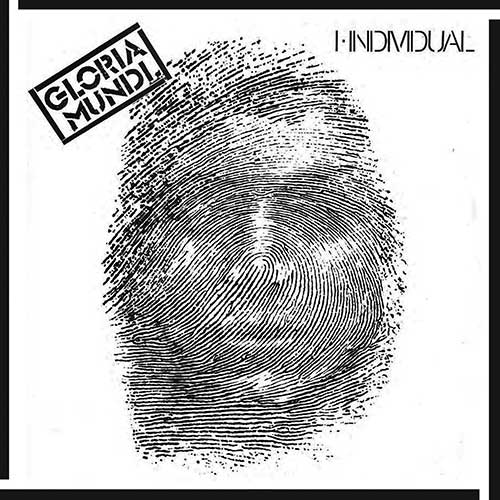
For a band sitting uncomfortably in Punk, came a similarly ill-fitting album, but it’s an absolute corker.
Given the visual and theatrical element to the band, it’s surprising there are no pictures of them anywhere on it, whether posed or live. There was on the Japanese release for some reason. That said, the album cover is striking and genius, featuring a dystopian thumbprint with a face of indiscriminate sex behind it.
So what do you get? For your average punk rocker picking up the album, they must have baulked at the amount of 6-minute songs. Then there was the discordant intro of The Pack kicking off the whole affair. This wasn’t Rocket To Russia!
Reviews from the time were actually positive. Below is Mick Wall’s from Sounds, July 1978

GothPunk’s website pretty much nails it as a more retrospective review.
I-Individual takes the established Gloria Mundi sound, pumps it full of helium and floats it into space. Now we watch these grandiose baroque virtuosos transform into bloody-nosed rococo dandies, only to become the unseen scouts clearing a path for the revolution. A hybrid of Roxy Music at their most suave and smug, Magazine at their most bitingly intelligent and the Adverts at their most charmingly pissed off, I, Individual is an album that looked to the past but came too soon.
The Pack is the figurative parting of the curtain, boasting military drum beats over an innocent, almost childish melody before crashing into a swaying, glittering chorus. The melody flip-flops between swelling pride and vulnerable heartbreak, employing over-the-top guitars and even what sounds like a harpsichord. Sunshine joins the ranks of Crass and Poison Girls with her scathing spit in the face of gender, I Like Some Men. Daughters of Rich Men, my personal favorite, begins with elegant saxophone, sophisticated piano, and gentle guitar making way for Maelov’s fragile vocals. Yet, the melodrama and sinister sneer in the chorus line “Daughters of rich men cannot say no in the dark” tears away the frowning porcelain facade to show the giggling sharp teeth and squinting venomous eyes of spiteful lust. This tragicomedy of class relations, resentment and lust should have been a classic.
Park Lane juxtaposes seedy, murderous, yet sympathetic lyrics over an impossibly innocent keyboard line. With a chorus that crashes, glistens and stomps, you can almost see a young Brett Anderson taking notes. The title track fulfills the vitriol quota enough to please the angst crowd without straying from the grandeur of the album.
A gently dark and beautiful refrain punctuates the punk carnival of Split Personality before the impending collapse into brass-dominated psychedelia, only to return to the aggressive, but deliberate chorus. By the closing of I-Individual you’ll feel as if you’ve snorted battery acid and drain-o and survived to spend two weeks making out with the lover of your dreams. In other words, it’s insane, over-the-top, and extremely fun.
Remastered clear vinyl re-release with history insert and free LTD postcard available HERE
The Word Is Out (RCA 1979)
If the first album confused people, then wait until they got a load of this one. Punk/post-punk/goth/new wave – now add NWOBHM, double bass pedal, heavy rock and prog. Kirby, the new guitarist, was very proficient, having earned his chops in Fleetwood Mac and Curved Air. The producer was the very talented John Punter, who’d worked with everyone from Caravan and, more recently, Roxy Music and Japan.
Gone was the punky Gloria Mundi logo, and the cover was pretty nondescript. The band had no control over either, and RCA’s art department presented them with them as a fait accompli. The title The Word Is Out was a line from the song Blackout. Later events would make this title cruelly ironic.
Eddie Maelov: I began writing the material for the 2nd album after we finished the first. For some reason, RCA gave us 6 months’ studio time in the Who’s studio, Ramport, which was a huge outlay (we thought) at the time, so a lot of care was taken over the production.
Nigel and Mike blended well as an accomplished rhythm section and Kirby gave us a different guitar style. Another main influence was having John Punter as producer (he’d worked with Roxy Music before).
While his production created a more polished sound, it may have hurt us since it lacked the raw, punk feel of our earlier music, plus the musicianship had developed. I think we spent around £40,000 on the recording.
Nigel Ross-Scott I’d done some recording with Punter and I introduced him to the band [coincidence #3] I knew him from when I’d recorded three tracks with Davey O’List who was had played with Roxy Music and The Nice and he’d produced. John was such a lovely guy that he just got on with everybody in Mundi straight away.
Kirby was a mate of Punters probably from his Stretch period, I think. They were obviously good friends. So for me and Mike, it was all a little bit like, okay, God’s brought Jesus to the recording session, and we were all the acolytes.
The classier, slightly heavier sound was mostly down to John.
At this time, punk had moved to new wave to post punk and synths in bands had become more prevalent. Magazine were releasing Second Hand Daylight, Japan Quiet Life and Gary Numan’s The Pleasure Principle, to name a few. It’s hard not to think what it might have sounded like with Beethoven’s more post-punk guitar, which had that edge and melodic picked lines.
Anyways, here are the picks
From the opening kick drum attack of First Light Of Day that sounds like Motorhead goes Prog Punk, it’s a well-crafted and produced album. Everything is heavier and slicker.
Given the heaviness, it’s all the more surprising to have a drum machine bossanova intro to YY followed by staccato guitar, elegant, sinuous sax and synth lines, and catchy chorus. This should have been the lead single, and nothing else on the album sounds like it.
Do You Believe is Sunshine taking over lead vocals, and it’s very heavy again.
Temporary Hell – very proggy and some nice soloing. Dangerous To Dream is a four to the floor 24 karat rocker and is the perfect gig intro song. In fact, its intro is almost impossible to live up to – it’s like a post-punk Highway Star, then goes a bit Rush-like circa 1982, and some may be put off by how heavy it is.
Nigel Ross-Scott On Dangerous which I wrote, but not exclusively that song, Kirby was going through two Leslies, which were revolving speakers that were normally used with Hammond organs. One wasn’t enough to gte the sound we wanted, so we used two. We put one track of the guitar out of phase and another one in phase in order to get this massive, galloping rhythm sound. Again, a phenomenal learning experience for somebody like me. From 1981 onwards, you’d have used a sequencer instead of me playing fast eights on the bass. But in 1979 we had to do it ourselves and really good fun.
More rock with Glory Of The World, which, as I’ve said before, is pure Hawkwind – heavy riffing at motorik pace with phased spaced effects and Space Ritual era drumming. The song has been redone and is more polished than the single.
In The Blackout is more like the Gloria Mundi of old, though Eddie sounds like Tim Smith of The Adverts.
TalkPunk
Post comments, images & videos - Posts are checked and offensive or irrelevant ones will be removed